From knowing your numbers to changing them: why AI health coaching belongs in the action layer
Written by: Bernard Louvat
Role: CEO & Founder
Created at:
Quick read
- In a16z's survey of 500 US consumers, 54% use a wearable, 83% of those check it every day, and 55% say the data has never prompted a behavior change or a doctor's visit.
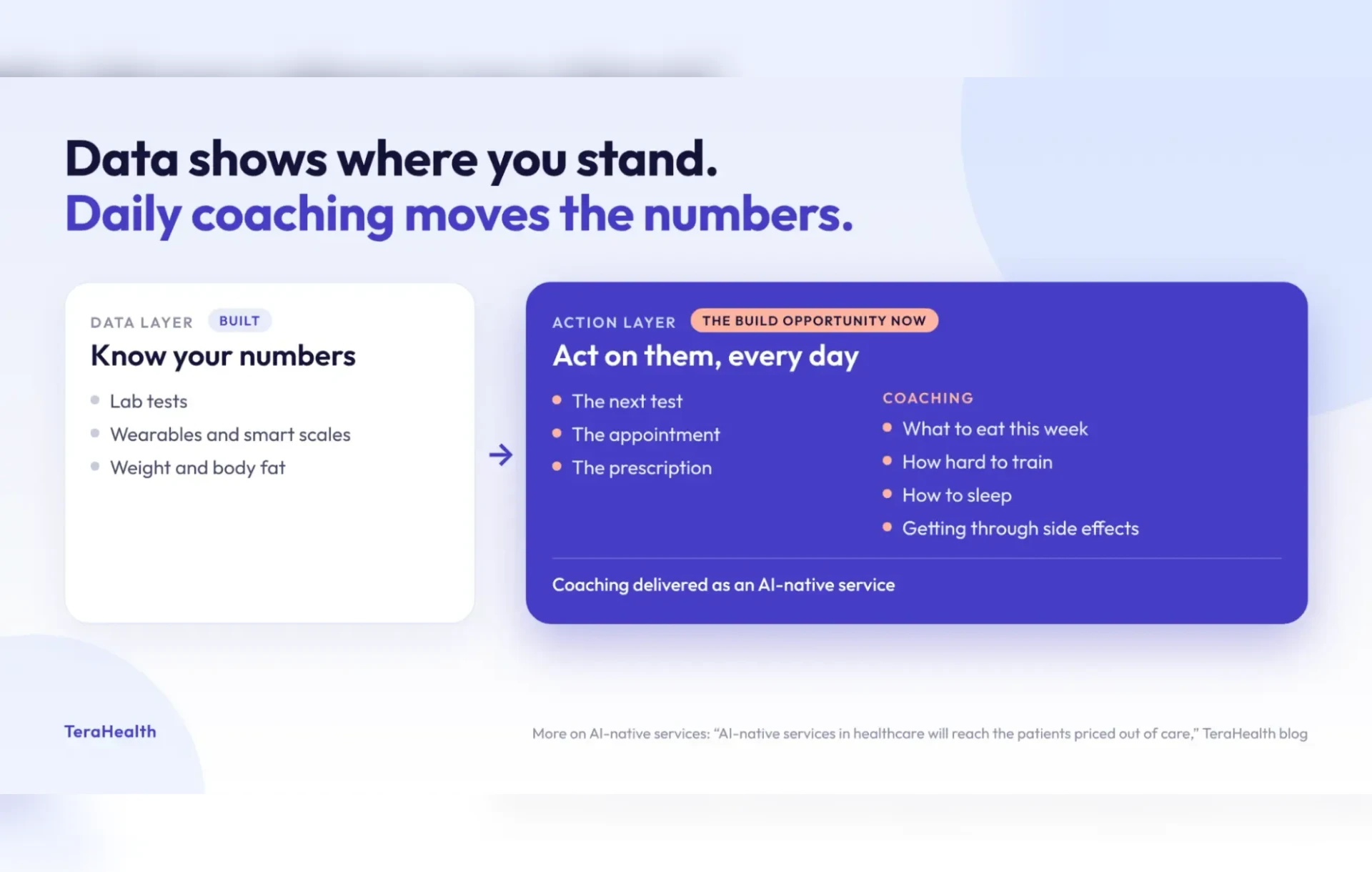
- The data layer came first. Labs, wearables and AI now tell people a lot about their health, and a16z expects value to move to "the companies that can figure out the action layer", which they describe as the next test, the appointment and the prescription. We would extend it to the actions people take every day: what they eat, how they move, how they sleep and how they get through the side effects of a new drug.
- Daily behavior changes outcomes. In the Diabetes Prevention Program, a lifestyle program reduced new cases of diabetes by 58%, and metformin by 31%.
- Coaching only works when it is personal and current. People eating identical meals have very different responses, and a plan should change with each new lab result, dose step and symptom.
- We started with GLP-1 coaching for telehealth companies, pharmacies and pharma brands. Next come coaches for other drugs, conditions and healthy people.
Who this is for: Telehealth infrastructure companies, D2C telehealth brands, pharmacies and pharma brands; doctors who prescribe GLP-1s and the dietitians and personal trainers who coach those patients; lab, wearable and EHR companies that want their data to turn into daily coaching for their users; and investors in healthtech and AI-native services.
Article
Most people who wear a health tracker look at it every day, and most say it has never changed what they do. Andreessen Horowitz's Bio + Health team surveyed 500 US consumers for The State of Longevity, published November 3, 2026. 54% use a wearable and 83% of those users check it every day. Yet 55% of wearable users say their data "has never prompted a behavior change or a doctor's visit."
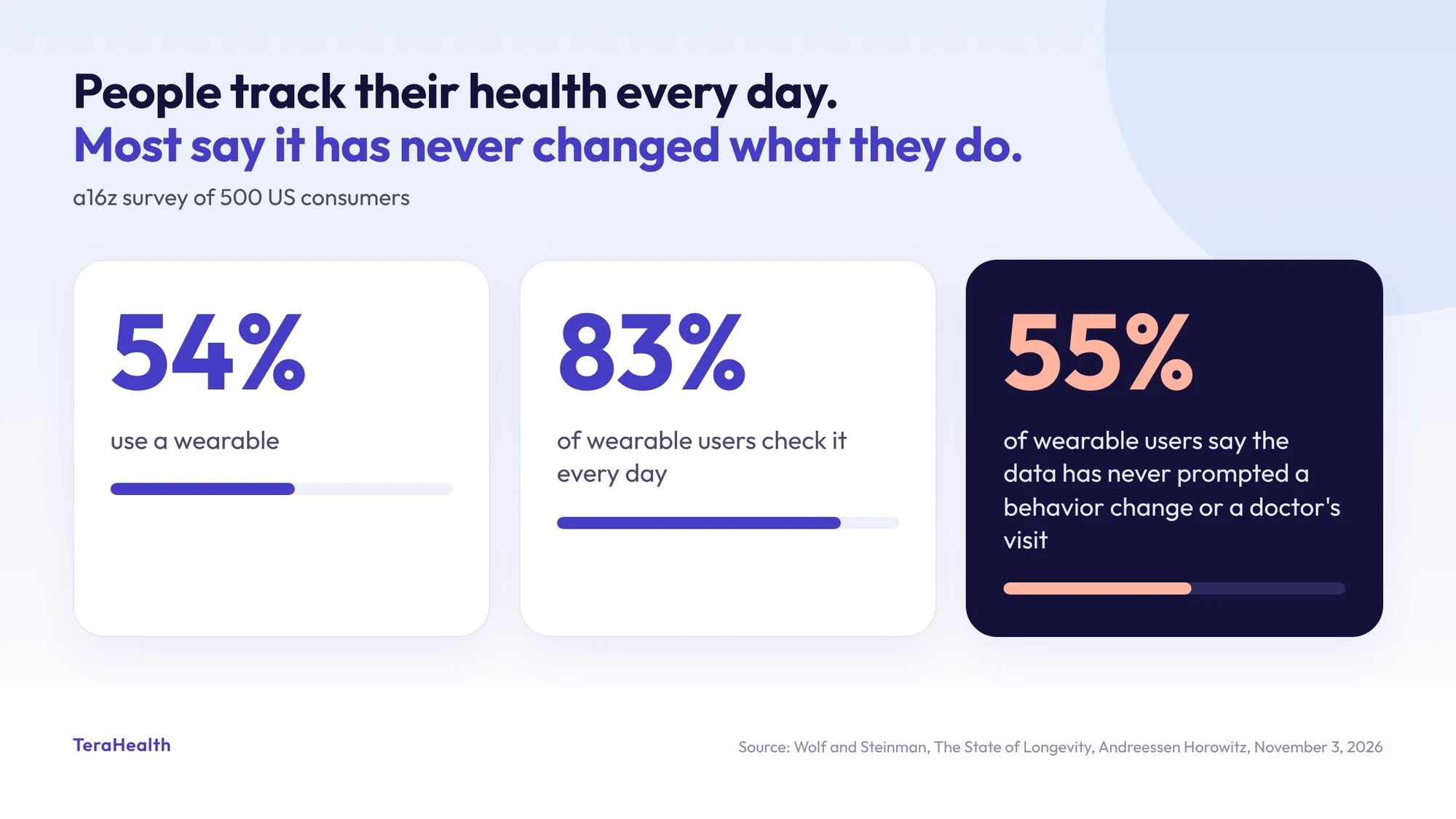
Source: Wolf and Steinman, The State of Longevity, Andreessen Horowitz, November 3, 2026.
The authors, Daisy Wolf and Eva Steinman, sum it up in one line: "Knowing your numbers is the starting point. The opportunity is helping people act on them." They expect value to go to "the companies that can figure out the action layer", which they describe as arranging the next test, booking the appointment and getting the patient follow-up care and prescriptions.
We would extend that action layer. A test result or a prescription is a decision. The actions that change the next result come after it: what to eat this week, how hard to train, how to sleep, what to do on day three of a new dose. Most programs leave those to the patient. Coaching is how they get done.
Why coaching belongs in the action layer
Chronic disease is driven by what people do every day. Three in four American adults have at least one chronic condition, and the CDC says many chronic diseases are caused by a short list of risk behaviors: smoking, poor nutrition, physical inactivity and excessive alcohol use.
Changing those behaviors works, sometimes better than a drug. The Diabetes Prevention Program randomly assigned 3,234 adults without diabetes to a placebo, metformin or a coached lifestyle program. The lifestyle program reduced new cases of diabetes by 58%, and metformin by 31%, compared with placebo.
The same is true when a drug is involved. In Blue Cross Blue Shield claims for GLP-1 patients, each additional provider visit raised the likelihood of reaching 12 weeks of treatment by about 60%. In Omada Health's 12-month analysis, 67% of coached members without diabetes were still on their GLP-1 at one year, against 47% to 49% in a comparable published study.
Few people can pay a dietitian, a trainer and a sleep coach to follow them every week. That is the work AI can make affordable for everyone, as long as clinician-approved rules, and not the language model, decide what the plan says. We wrote about that model in AI-native services in healthcare.
Coaching has to be personal and current
Generic advice assumes people respond to food in the same way. They don't. In the PREDICT 1 study of 1,002 adults, blood sugar, insulin and triglyceride responses to identical meals varied widely from person to person. In an 800-person study, diets personalized to each person's predicted response resulted in significantly lower post-meal glucose responses.
A plan also has to change when the data does. Here is one GLP-1 patient's week. Maria is 48 and starts semaglutide through a D2C telehealth brand. Her brand ordered baseline labs, which show high LDL and low ferritin. Many brands don't order labs, and patients can upload their own. Her prescriber steps her dose from 0.25 mg to 0.5 mg in week 5, following the label's four-week escalation schedule. Her smart scale tracks her weight and body fat, and her phone counts her steps.
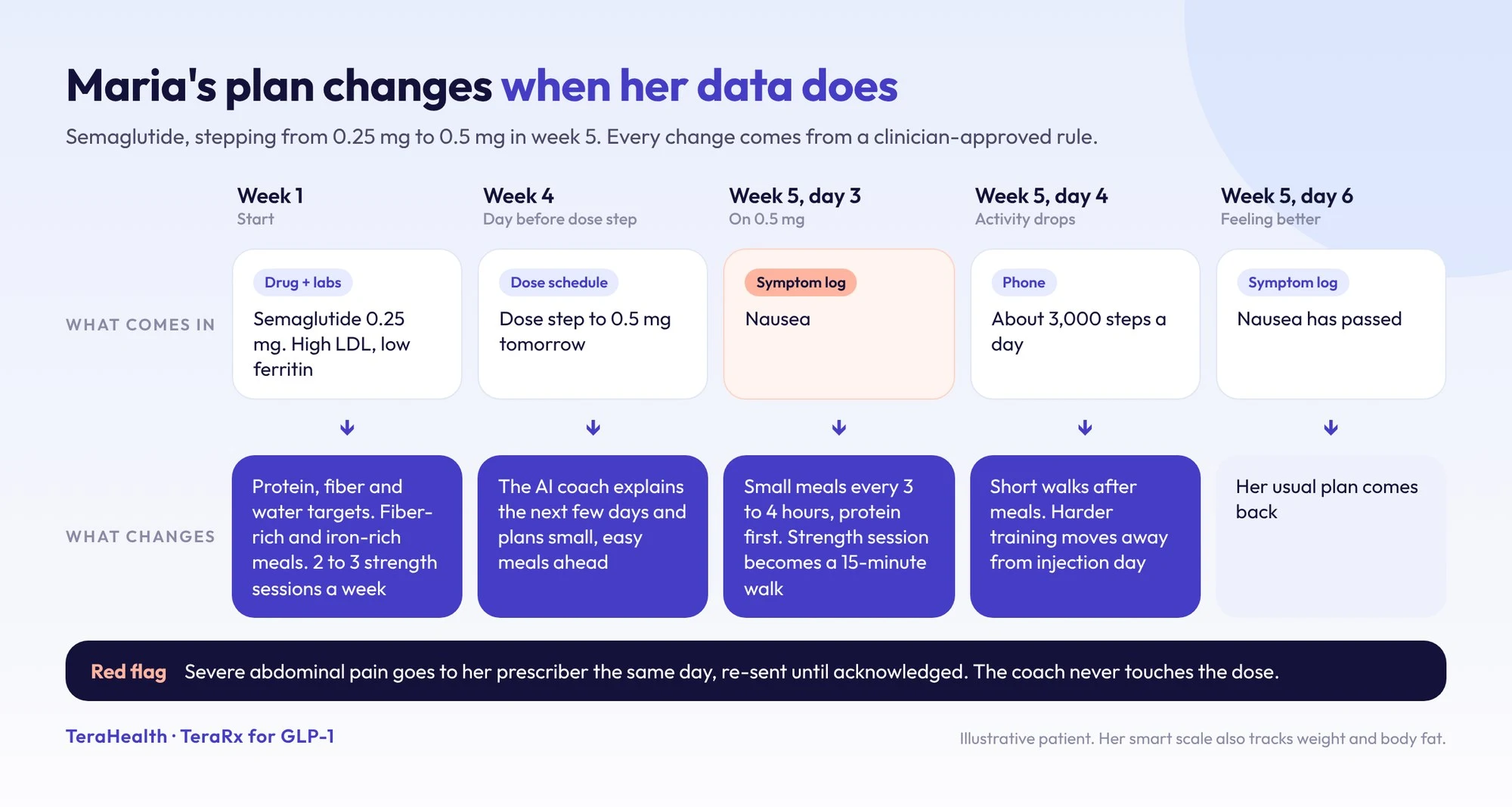
Maria's week: what comes in and what changes in her plan. Illustrative patient.
- Week 1, from her drug and her labs. Her protein, fiber and water targets come from the rule for her drug, dose and treatment week. Her LDL result shifts meals toward fiber-rich foods and less saturated fat, and her ferritin result adds iron-rich foods. She sees a meal plan, not a lab interpretation. Her fitness plan sets two or three light-to-moderate resistance sessions a week to protect muscle, since 38% of the weight lost in the semaglutide trials was lean body mass.
- The day before her dose increase. The AI coach tells her what the next few days may feel like and plans small, easy meals ahead of time.
- Day 3 on 0.5 mg, she logs nausea. A side-effect version of her plan replaces the usual one: a small breakfast, then a small meal every 3 to 4 hours with enough fluids, protein first. Her strength session becomes a 15-minute walk.
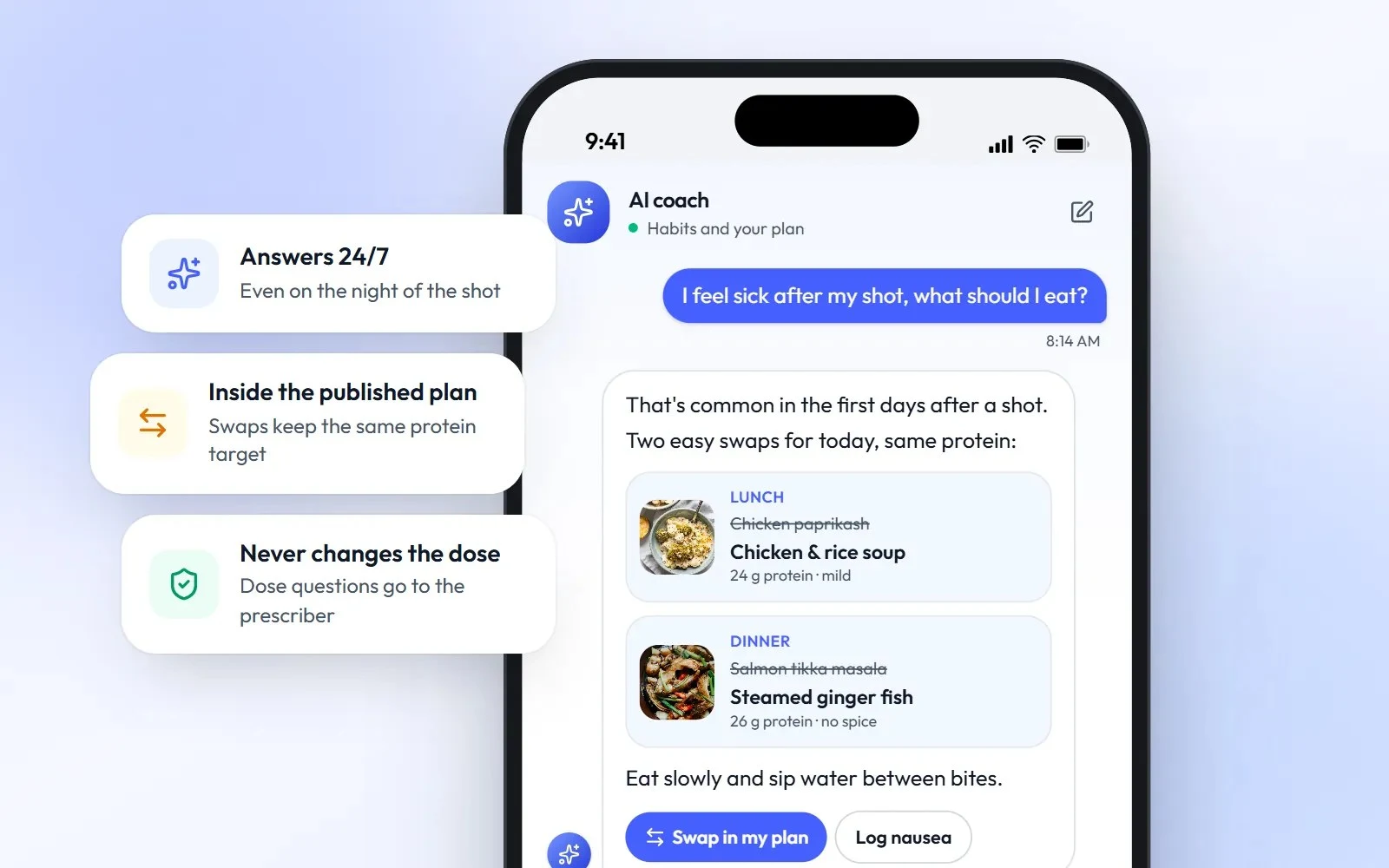
The AI coach on a nausea day. It answers inside the published plan and never changes the dose. TeraRx for GLP-1.
- Her steps drop to about 3,000 a day. The fitness plan adds short walks after meals, and harder training moves away from injection day.
- Day 6, the nausea passes. Her usual plan comes back.
- If she reports severe abdominal pain, it goes to her prescriber the same day as a clinical flag, re-sent until someone acknowledges it. The coach never touches the dose.
Every change in Maria's week came from a rule approved by clinicians. The language model only put it into words, and anyone reviewing the plan can open a change and see the rule and the evidence behind it.
Why we started with GLP-1
GLP-1 is where the action layer breaks first. In claims for 169,250 commercially insured adults, 30% stopped within four weeks and only 42.2% stayed on the medication for 12 weeks. After cost, side effects are the main reason patients give for stopping, and they follow the dose schedule, as we showed in The 11 GLP-1 side effects to plan for in the first 12 weeks. Because the drug, the dose and the week are known, most coaching decisions can be made by rules.
The buyers already exist. Telehealth companies, pharmacies and pharma brands that sell or support GLP-1s need patients to stay on therapy, and they can offer coaching under their own brand. TeraRx, the drug coaching platform, does that as AI coaching or as AI plus human coaches. Partners build it into their app with the TeraRx API & SDK for GLP-1, or have us run it as TeraRx Managed for GLP-1, with no engineering integration on their side. TeraRx is not a pharmacy. It never prescribes or dispenses. Why coaching is the main source of value for brands that sell GLP-1s is the subject of our next article.
Our roadmap: from GLP-1 to healthmaxxers
Everything in Maria's week runs on TeraCore, our clinical AI platform. Its clinical knowledge bases hold the evidence as rules: Biomarkers to Conditions; Conditions to Protocols; Conditions and Goals to Foods as Medicine; and Drug to Coaching Protocol. Licensed dietitians sign off the food and supplement rules, certified personal trainers sign off the fitness rules, and our clinical lead, an MD, approves everything. Six Protocol Builders turn those rules into nutrition, supplement, fitness, sleep, stress and lifestyle plans.
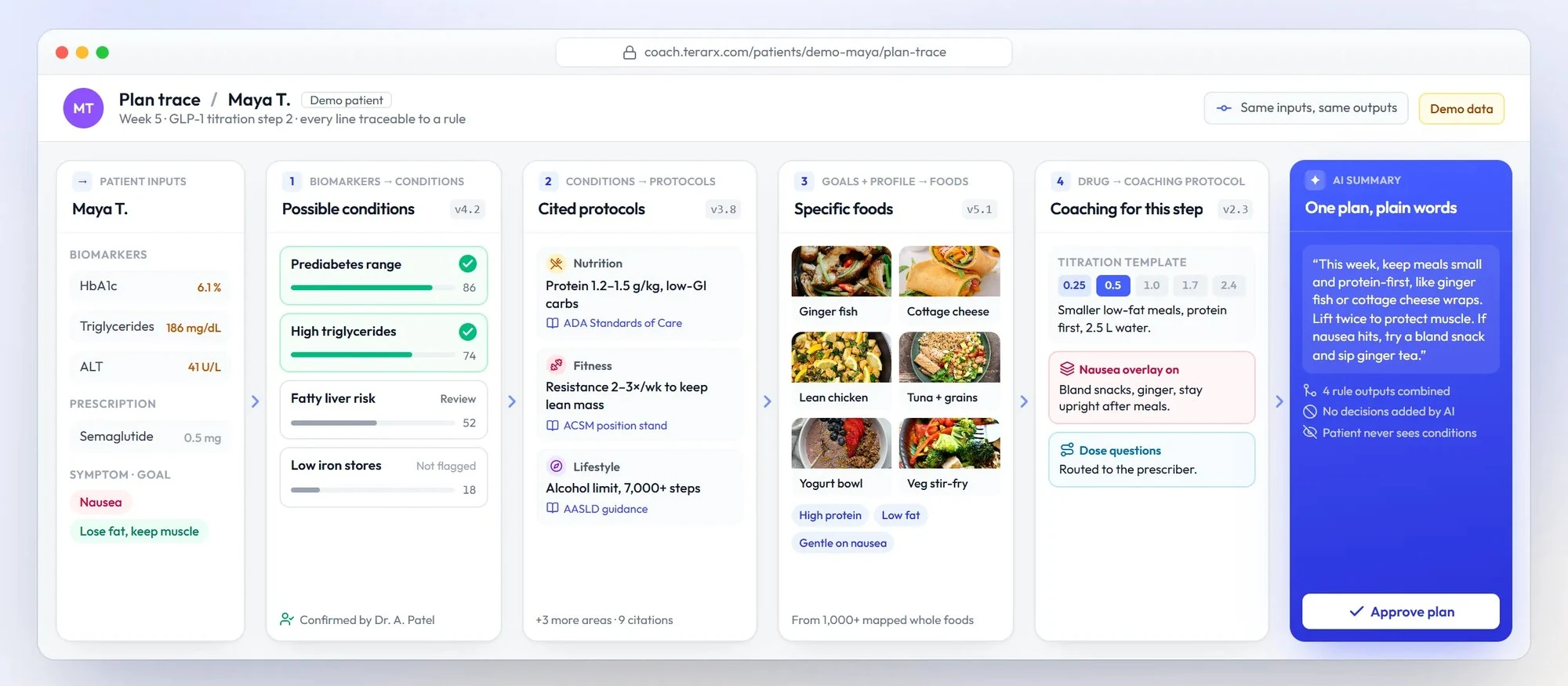
A plan trace in the coach portal: the four TeraCore knowledge bases behind one plan. Practitioner view, demo data.
Because the medical knowledge lives in TeraCore, a coach for a new drug or condition does not need a new product. We add the clinical rules for it, our clinicians approve them, and the same engine builds the plans. That is why we can launch a new coach quickly. TeraRx for GLP-1 is our first coach for people on medication. TeraRx for Hormone Therapy comes next, followed by coaches for other drugs, specific conditions, and coaches for health optimization, for the healthy people a16z calls "healthmaxxers" who want to extend their healthspan and live longer.
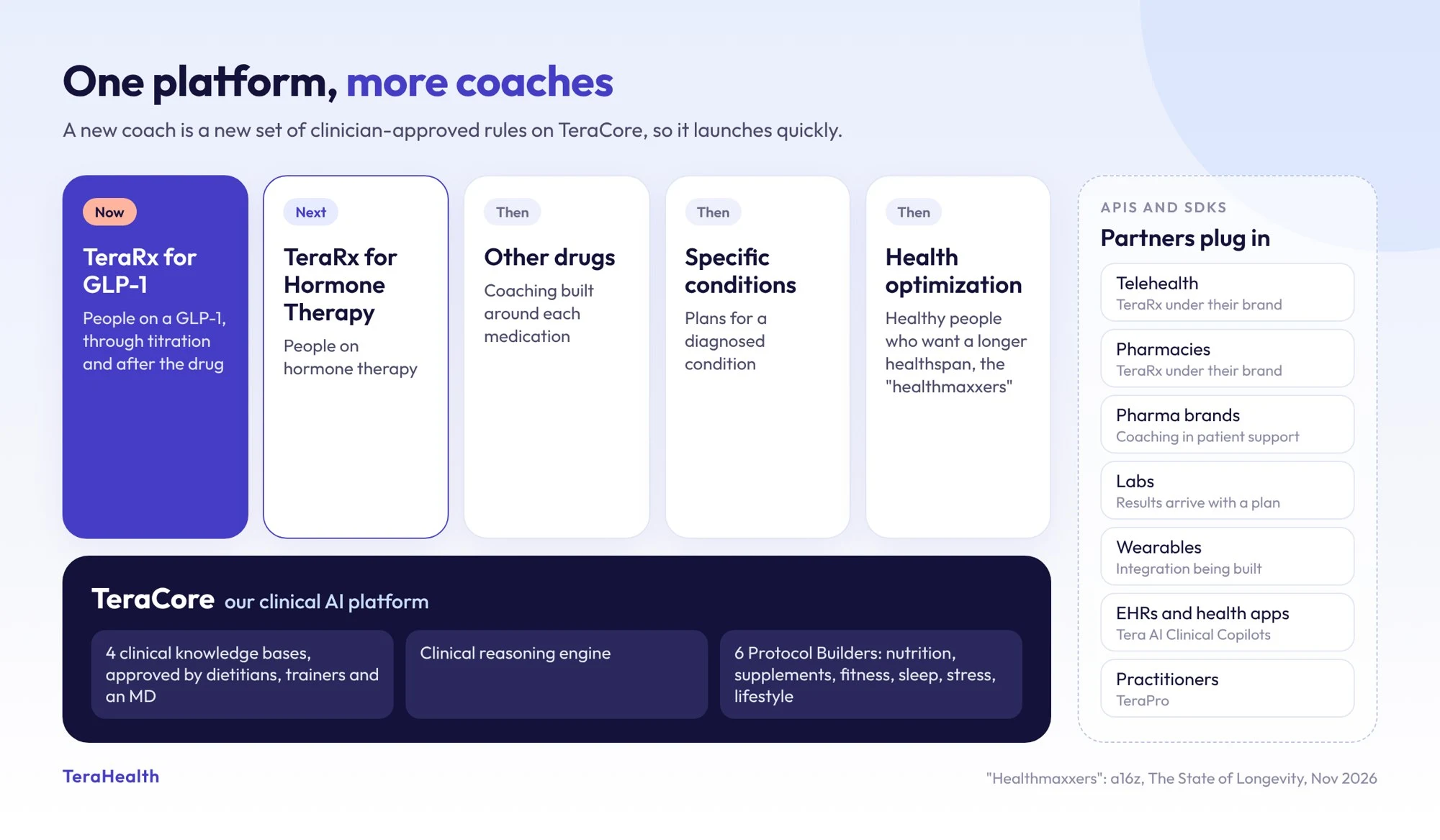
One platform, more coaches. Partners plug in through APIs and SDKs to build their coaches on our platform or buy our Managed Solution.
Partnering beyond telehealth: TeraCore through APIs and SDKs
Much of a person's health data lives with companies that will never run a coaching program themselves: labs and diagnostics companies, wearable makers, EHR vendors and digital health apps. We partner with them. Through Tera AI Clinical Copilots, they license TeraCore's modules through APIs and SDKs, including clinical reasoning, the six Protocol Builders, an AI scribe and a patient app, so a lab result or a week of sleep data can arrive with a protocol attached.
For doctors who prescribe GLP-1s, and the dietitians and trainers who coach their patients, the AI does the routine work of turning labs, goals and medications into plans, and does the daily follow-ups. They stay the human coach in the practitioner portal, with more time to go deeper with each client. For coaches who are not licensed practitioners, the reasoning runs in the background and is used only to personalize the plan, and no product recommends a medication, a dose or a dose change.
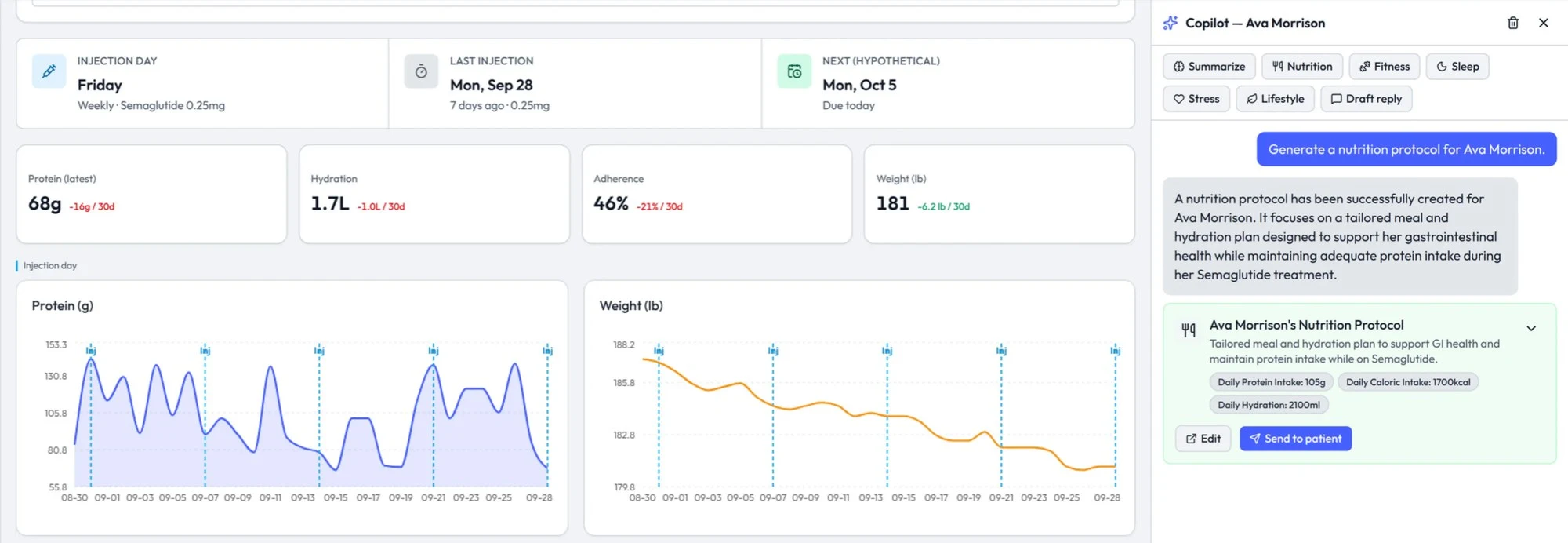
The practitioner portal with Copilot. The AI drafts the nutrition protocol and the dietitian reviews and sends it. Demo data.
We have done this before
At TouchCommerce, now part of Microsoft, our team built AI and human customer service agents that helped AT&T, Verizon, Comcast and Bank of America keep their subscribers. The lesson carries over. People stay when someone helps them at the moment they want to quit, and AI makes it possible to be there for every one of them, at those moments of truth.
Knowing your numbers is the start
a16z is right that the opportunity is helping people act on their numbers. We think the biggest part of acting on them happens every day, at breakfast, in the gym and on the hard days of a new drug. That is coaching, and it belongs in the action layer.
If you sell GLP-1s, book a demo or watch our 60-second product demo. If you run a lab, wearable, EHR or digital health product, see Tera AI Clinical Copilots. If you invest in healthtech or AI-native services in healthcare, get in touch.
More articles like this
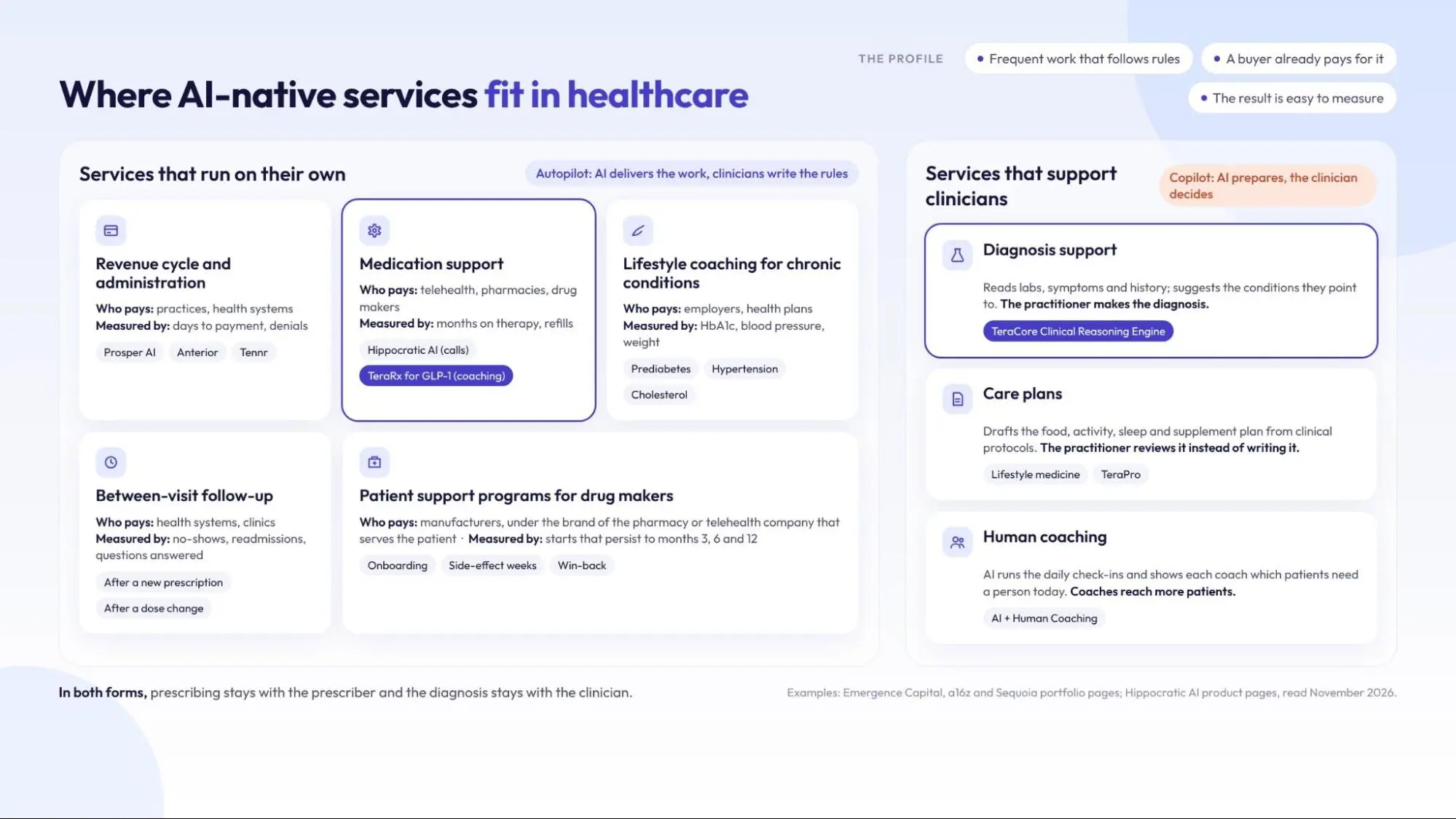
AI-native services in healthcare
Bernard Louvat
Much of healthcare is service work priced by the hour. AI-native services can bring that work to every patient, starting with GLP-1 coaching.
Industry insights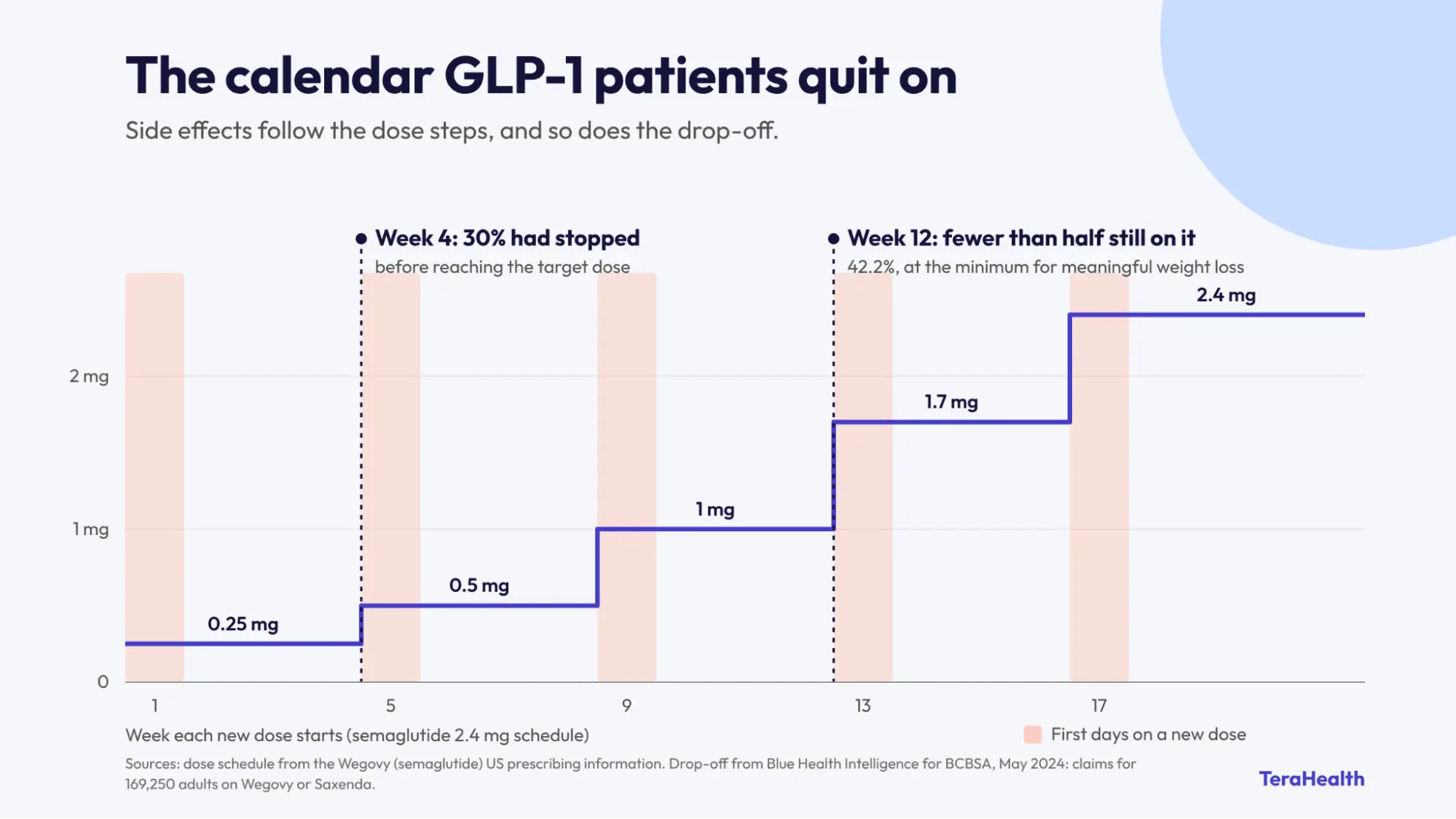
The 11 GLP-1 side effects to plan for in the first 12 weeks, and how coaching helps patients stay on therapy
Bernard Louvat
GLP-1 side effects follow the dose schedule, and so does the drop-off. Here is when and why patients stop, and how to manage GLP-1 side effects week by week.
Patient engagement and retention
Introducing TeraRx for GLP-1 partners
Bernard Louvat
TeraHealth is opening TeraRx for GLP-1 to a first group of launch partners. It coaches patients through side effects under your brand. Coaching is about $19.99.
Product updates