The 11 GLP‑1 side effects to plan for in the first 12 weeks, and how coaching helps patients stay on therapy
Written by: Bernard Louvat
Role: CEO & Founder
Created at:
Quick read
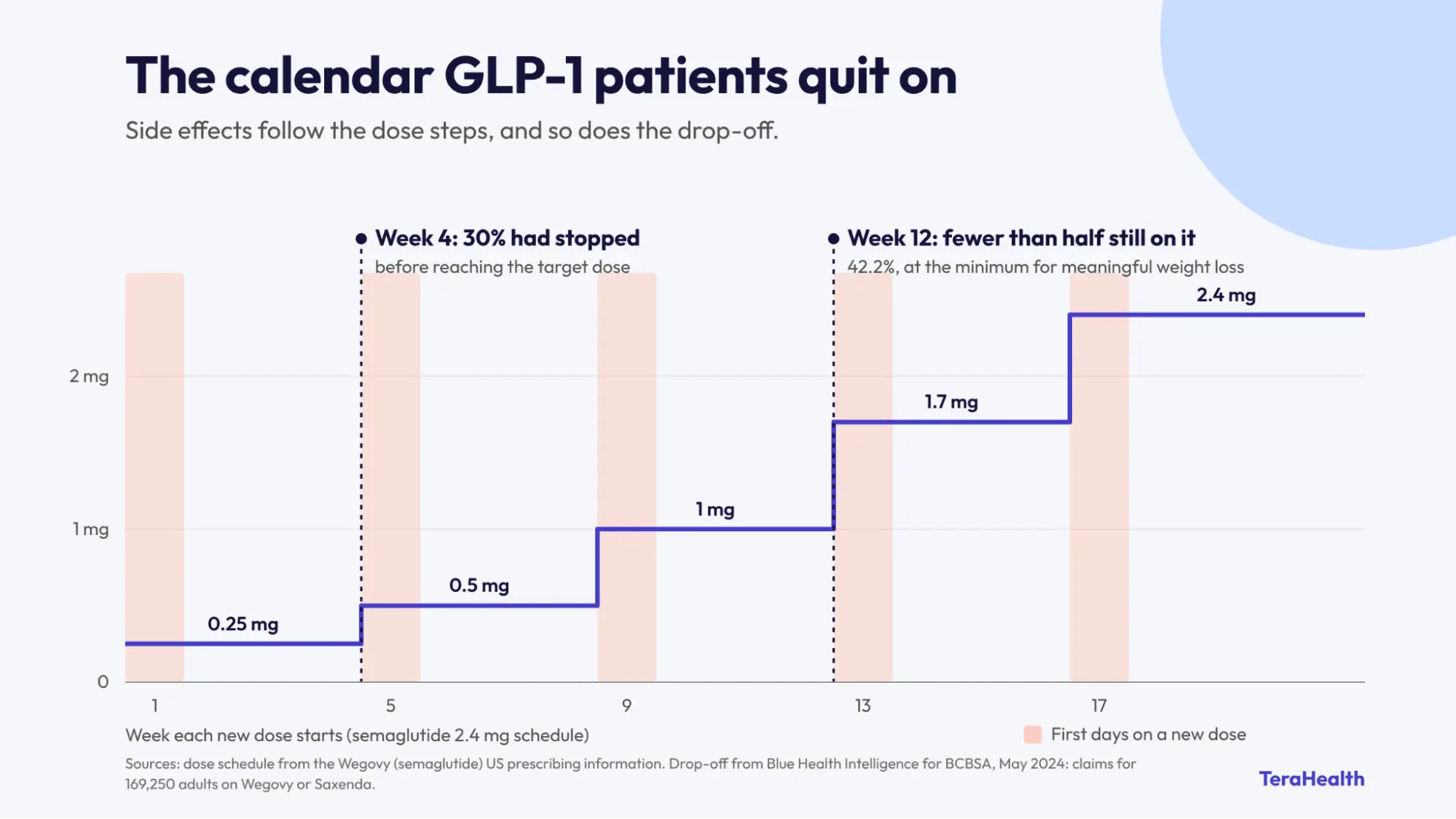
- 30% of GLP-1 patients stopped within four weeks, and fewer than half reached 12 weeks, the minimum for meaningful weight loss.
- Side effects follow the dose schedule. The hardest days are the first days on each new dose, so they can be planned for.
- The most common GLP-1 side effects are digestive: nausea (44%), diarrhea (30%), vomiting (24%) and constipation (24%) in the semaglutide trials (Wegovy).
- GLP-1 muscle loss is the one patients don't feel: 25% to 38% of the weight lost in the trials was lean mass.
- Each of the 11 side effects has a nutrition or fitness response: smaller meals, fluids, fiber, protein and resistance training.
- Contact keeps patients on therapy. Each added provider visit raised the likelihood of reaching 12 weeks by about 60%.
Who this is for: If you run a GLP-1 program at a telehealth company, pharmacy or drug maker, these are the weeks you lose patients, and side effects are a main reason. If you're a clinician or coach, the table below is a checklist for your patients.
Article
Three in ten patients stopped within four weeks. That is what Blue Health Intelligence found for the Blue Cross Blue Shield Association in claims for 169,250 commercially insured adults prescribed semaglutide (Wegovy) or liraglutide (Saxenda) for weight management between 2014 and 2023. They stopped while the dose was still being increased, before they reached the target dose.
In the same claims, fewer than half stayed on the medication for 12 weeks (42.2%). BCBSA calls 12 weeks of continuous treatment the minimum to reach clinically meaningful weight loss. Most of these patients never found out whether the drug would work for them. After cost, GLP-1 side effects are the main reason patients give for stopping. This article covers when they start, how common each one is, and how to manage GLP-1 side effects in the first 12 weeks.
When do GLP-1 side effects start, and how long do they last?
GLP-1 doses go up in steps. Semaglutide for weight loss (Wegovy; the same drug is sold as Ozempic for type 2 diabetes) starts at 0.25 mg a week and steps up every four weeks, reaching the maintenance dose at week 17. Tirzepatide (Zepbound) starts at 2.5 mg and can go up by 2.5 mg after at least four weeks on each dose.
GLP-1 side effects follow those steps. The tirzepatide label says "the majority of nausea, vomiting, and/or diarrhea events occurred during dose escalation and decreased over time." In the semaglutide 2.4 mg trials, 44% of patients reported nausea against 16% on placebo, and 24% reported vomiting against 6%. The label tells prescribers to follow the escalation schedule to reduce the risk of gastrointestinal side effects, and to consider delaying a step by four weeks if a patient doesn't tolerate a dose.
So the hardest weeks are known in advance. On the semaglutide schedule they start in weeks 1, 5, 9, 13 and 17, the first days on each new dose.
Why do people stop taking GLP-1s?
Patients who stop give two main reasons. Among people who had stopped a GLP-1, about 4 in 10 named cost as the main reason and nearly 4 in 10 named side effects, in KFF's November 2025 poll.
What are the most common GLP-1 side effects?
Most patients get at least one digestive side effect. In the tirzepatide (Zepbound) trials, 56% of patients on each dose reported a gastrointestinal side effect, against 30% on placebo.
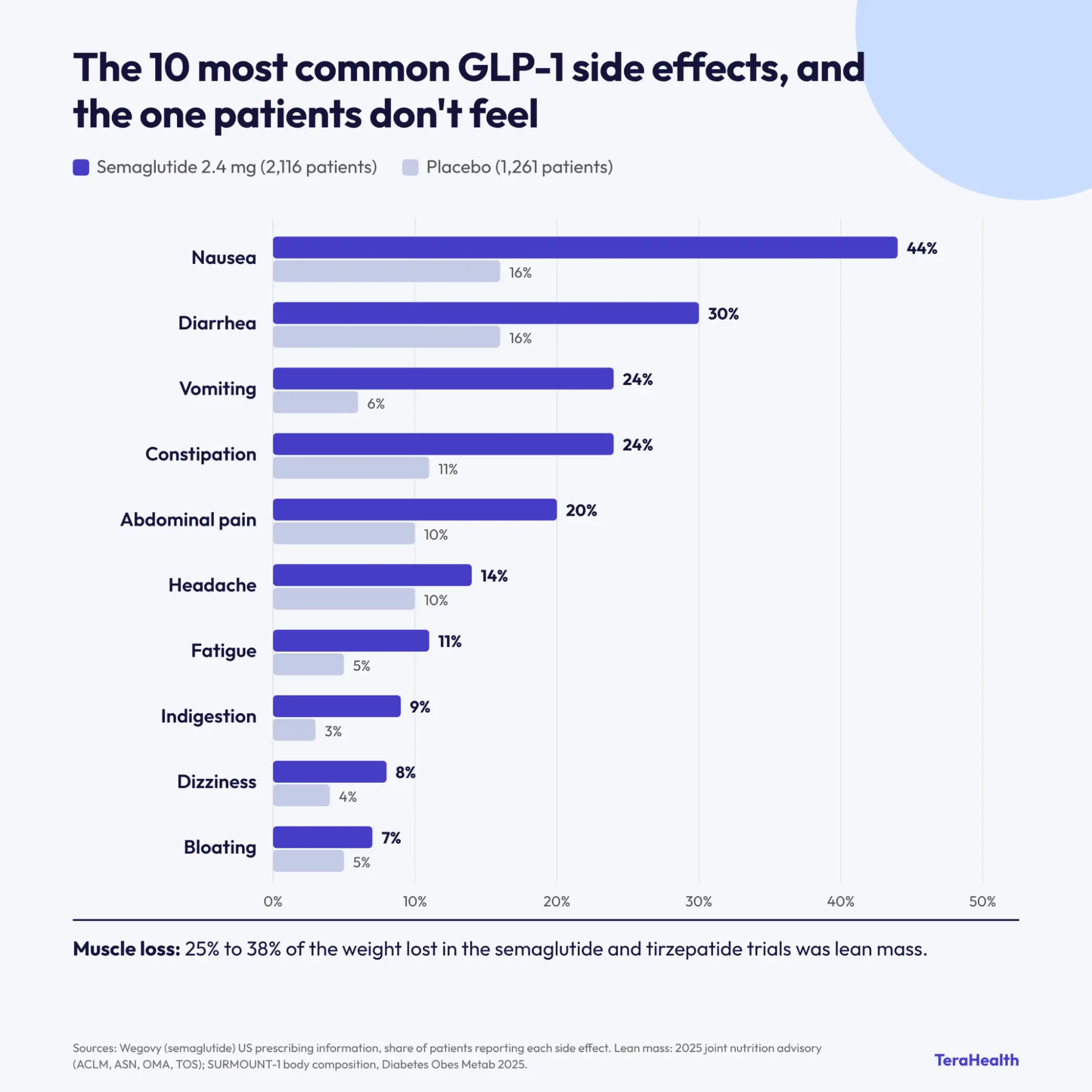
Nausea is only the first of them. These are the 10 most common side effects in the semaglutide (Wegovy) 2.4 mg weight-management trials (2,116 patients on the drug, 1,261 on placebo):
- Nausea: 44% (16% on placebo)
- Diarrhea: 30% (16%)
- Vomiting: 24% (6%)
- Constipation: 24% (11%)
- Abdominal pain: 20% (10%)
- Headache: 14% (10%)
- Fatigue: 11% (5%)
- Indigestion: 9% (3%)
- Dizziness: 8% (4%)
- Bloating: 7% (5%)
Tirzepatide shows the same pattern. On the 15 mg dose, 28% reported nausea (8% on placebo), 23% diarrhea (8%), 13% vomiting (2%) and 11% constipation (5%).
The largest US study shows the same pattern. Of 125,474 adults with overweight or obesity, 64.8% of those without type 2 diabetes stopped within a year. Patients with moderate or severe gastrointestinal side effects were more likely to stop.
Patients who stop mostly stay stopped. In the same study, 36.3% of adults without type 2 diabetes restarted within a year, and side effects made a restart less likely.
Do GLP-1s cause muscle loss?
There is one side effect patients don't feel at first: GLP-1 muscle loss. In the semaglutide trials, of an average 13.6 kg of weight lost, 5.3 kg (38%) was lean body mass, as reported in the 2025 joint nutrition advisory from four obesity and nutrition societies. In the tirzepatide trial, about 25% of the weight lost was lean mass.
The advisory estimates that without structured strength training, muscle makes up 10% to 15% of the weight women lose and 20% to 25% of the weight men lose. Keeping muscle matters for strength and for keeping the weight off, and it depends on two things a coach can help with every week: eating enough protein and doing resistance training.

Put together, the side effects patients quit over are mostly digestive, they are predictable, and they cluster in the first months, while the dose is still going up. Muscle loss runs alongside them, quietly. That is the window where coaching can support patients through the side effects and keep protein and strength training on track.
Does coaching help patients stay on a GLP-1?
The BCBSA brief has a finding that gets less attention than its headline. With each additional provider visit, the likelihood of reaching 12 weeks of treatment rose by about 60%.
Coaching programs report the same direction. In Omada Health's 12-month analysis of 965 members without diabetes, 67% were still on their GLP-1 at one year, against 47 to 49% in a comparable published study. When patients pay cash, a dietitian-led coaching program in the UK kept 39.6% active at 12 months, while a GLP-1 digital service in Germany had 12% adherent at 12 months with no coaching. Those are two separate studies with different definitions.
How to manage GLP-1 side effects, from nausea to muscle loss
Most GLP-1 side effects respond to what a patient eats, drinks and does that day. The digestive advice below follows the 2025 joint nutrition advisory. Where the advisory is silent, we describe how TeraRx protocols handle it. Medication questions always go to the prescriber.
The how-common column is the Wegovy label figure for semaglutide 2.4 mg versus placebo, except for muscle loss, which comes from trial body-composition data.
| Side effect | How common | What coaching does |
|---|---|---|
| Nausea | 44% vs 16% | Smaller, more frequent meals: a small breakfast, then a small meal every 3 to 4 hours, with enough fluids. Go easy on fatty and high-fiber foods in the early weeks. Ginger or peppermint tea can help. |
| Diarrhea | 30% vs 16% | Avoid large or high-fat meals. Replace fluids, because dehydration can harm the kidneys. |
| Vomiting | 24% vs 6% | Keep portions small, since vomiting is more likely after large meals. Fluids first. Repeated vomiting goes to the prescriber the same day. |
| Constipation | 24% vs 11% | From week one: fluids, fiber added gradually (prunes, dried fruit) and daily steps. |
| Abdominal pain | 20% vs 10% | Small, lower-fat meals. Severe or persistent pain goes to the prescriber the same day, because the label lists it as a possible sign of pancreatitis. |
| Headache | 14% vs 10% | A daily water target and regular meals, even on low-appetite days. |
| Fatigue | 11% vs 5% | Enough protein and calories on low-appetite days, a regular sleep window, and hard training scheduled away from injection day. |
| Indigestion and reflux | 9% vs 3% | Smaller meals, less fat and less alcohol. No late, heavy dinners. |
| Dizziness | 8% vs 4% | Fluids first, since low blood pressure and dizziness can follow fluid loss. No hard training while lightheaded. |
| Bloating | 7% vs 5% | Smaller meals eaten slowly. No large high-fat or high-fiber meals right after a dose step. |
| Muscle loss | 25% to 38% of weight lost was lean mass | Protein at every meal and 2 to 3 resistance-training sessions a week. |

If patients quit on the dose calendar, coaching should run on the dose calendar too. Here is the schedule we think every GLP-1 program needs.
- Before each dose step. Tell the patient what the next few days may feel like, and plan small, easy meals ahead of time.
- The first three days on a new dose. Check in every day. Keep protein up when appetite drops, switch to meals that are easy on the stomach, and swap hard training for a short walk.
- Any dose question or red-flag symptom. Send it to the prescriber the same day. Coaching is lifestyle only.
- Week 12. Show the patient what has changed so far. This is the point BCBSA links to clinically meaningful weight loss.
This is how we built TeraRx for GLP-1, the first program on TeraRx, the drug coaching platform. Because the drug, the dose and the week are known, and the side effects are reported, rules in TeraCore's clinical knowledge bases decide most of the coaching, and each reason patients stop has a matching response.
- Side effects. When a patient logs nausea, constipation, reflux or fatigue, a side-effect version of the plan replaces the usual one until the symptom passes: smaller, protein-first meals on injection day and the one or two days after, and walking instead of hard training near the injection.
- GLP-1 muscle loss. Protein targets come from the rules for the patient's drug, dose and week, and the fitness plan schedules two or three light-to-moderate resistance sessions a week to help keep muscle.
- Going quiet. The AI coach checks in after every injection, after a missed dose and after three days without a log, so a patient who goes quiet hears from someone.
- Dose questions and red flags. They go to the prescriber as a clinical flag, re-sent until someone acknowledges it. TeraRx never prescribes or changes a dose.
- Patients who need a person. On the AI plus human coaches plan, each coach starts the day with patients ranked by risk, with the reason shown, such as acute GI distress or no logs recently.
Licensed dietitians sign off the food and supplement rules, certified personal trainers sign off the fitness rules, and our clinical lead, an MD, approves everything.
Telehealth companies and pharmacies offer it under their own brand, as AI coaching or AI plus human coaches.
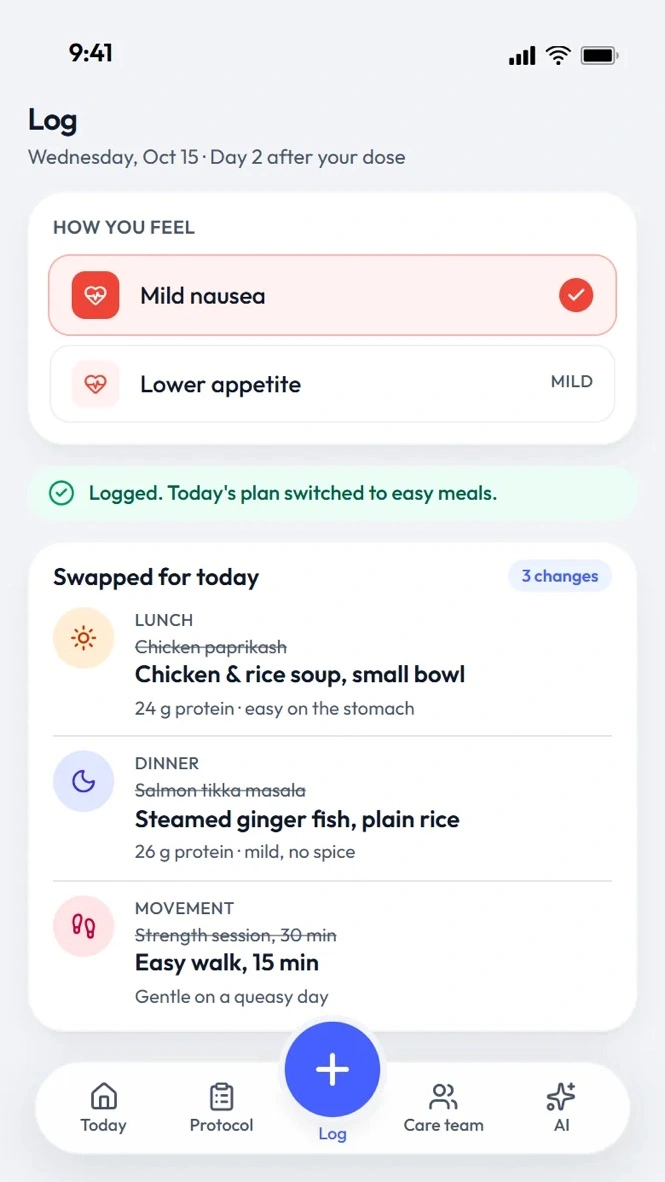
On day 2 after a dose, the patient logs mild nausea and the day's meals and workout switch to easier options.
TeraRx is not a pharmacy. It never prescribes or dispenses.
See it in our 60-second product demo.
If you sell GLP-1s, book a demo.
If you're a dietitian, nurse practitioner, physician or trainer who sees GLP-1 patients, get our one-page side-effect coaching guide.
Sources
- Blue Health Intelligence for BCBSA, Real-World Trends in GLP-1 Treatment Persistence and Prescribing for Weight Management, issue brief, May 2024.
- Wegovy (semaglutide) US prescribing information, revised June 2026.
- Zepbound (tirzepatide) US prescribing information, revised August 2026.
- KFF Health Tracking Poll, November 14, 2025.
- Cleveland Clinic newsroom, March 12, 2026, on Gasoyan H et al., Diabetes, Obesity and Metabolism.
- Rodriguez PJ et al., Discontinuation and Reinitiation of Dual-Labeled GLP-1 Receptor Agonists Among US Adults With Overweight or Obesity, JAMA Network Open 2025;8(1):e2457349.
- Healio summary of Rodriguez et al., January 31, 2025.
- Omada Health, January 8, 2026 release (Enhanced GLP-1 Care Track, 965 members).
- Omada Health, GLP-1 Flex Care announcement, March 5, 2026.
- Richards R et al., JMIR Formative Research 2025;9:e72577.
- Talay L et al., Diabetes, Obesity and Metabolism 2026.
- Nutritional priorities to support GLP-1 therapy for obesity: a joint advisory from ACLM, ASN, OMA and The Obesity Society, Obesity 2025;33(8):1475-1503.
- Body composition changes during weight reduction with tirzepatide in the SURMOUNT-1 study, Diabetes, Obesity and Metabolism 2025.
More articles like this
Opening TeraRx for GLP-1 partners
Bernard Louvat
TeraHealth is opening TeraRx for GLP-1 to a first group of launch partners. It coaches patients through side effects under your brand. Coaching is about $19.99.
Product updates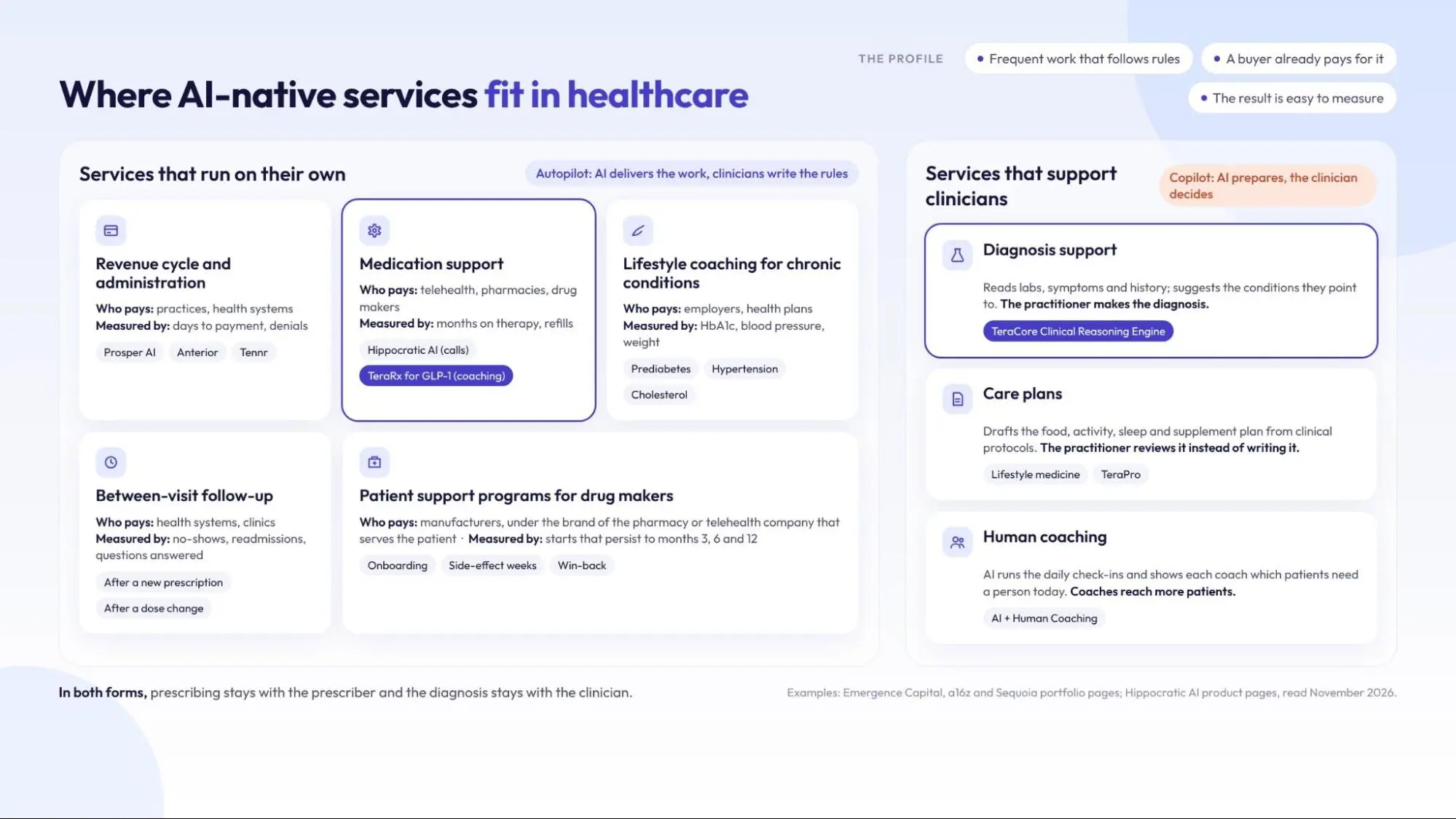
AI-native services in healthcare
Bernard Louvat
Much of healthcare is service work priced by the hour. AI-native services can bring that work to every patient, starting with GLP-1 coaching.
Industry insights